
x
African Health Sciences
[contact-form-7 id="2459" title="Sidebar Form"]

  • 256(41)530021
  • info@africanhealthsciences.org
African Health Sciences
  • info@africanhealthsciences.org
  • Give Feedback
  • Home
  • About Us
  • Staff
  • Focus & Scope
  • For Authors
  • More Links
    • About The Journal
    • Latest Articles
    • Journal Archives
    • Our Events
    • Faq’s
  • Contact Us
Logo

Contact Info

  • P. O. Box 7072 Kampala, Uganda
  • +256(41)530021
  • info@africanhealthsciences.org
  • ISSN 1680-6905
  • <!--
  • -->

02Jan2018

Changes in erythrocyte ATPase activity

by admin,  0 Comments
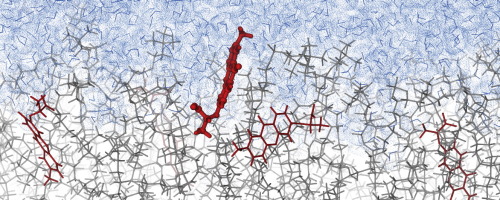
Changes in erythrocyte ATPase activity under different pathological conditions.

Ali A Kherd1, Nawal Helmi1,2, Khadijah Saeed Balamash1, Taha A Kumosani1,2,3,
Shareefa A AL-Ghamdi
1, Qari M4, Etimad A Huwait1, Soonham S Yaghmoor2,3,
Alaama Nabil
5, Maryam A AL-Ghamdi1, Said S Moselhy1,2,6,7
1. Biochemistry Department, Faculty of Science, King Abdulaziz University, Jeddah, Kingdom of Saudi Arabia.
2. Experimental Biochemistry Unit, King Fahd Medical Research center KFMRC, Jeddah, Kingdom of Saudi Arabia.
3. Production of natural products for Industrial health Research group, King Abdulaziz University, Jeddah, Kingdom
of Saudi Arabia.
4. Hematology department, Faculty of Medical Science, King Abdulaziz University, Jeddah, Kingdom of Saudi
Arabia.
5. King Abdulaziz University hospital, Jeddah, Kingdom of Saudi Arabia.
6. Bioactive Natural Products Research Group, King Abdulaziz University, Jeddah, Kingdom of Saudi Arabia.
7. Biochemistry Department, Faculty of science, Ain Shams University, Cairo, Egypt.


Abstract
Background: Studies have shown that Na+-K+ ATPase activity was altered in disrupted red blood cell membranes and this
enzyme is believed to be the site of active transport of Na
+ and K+ in intact red blood cells. The enzyme is often referred to as
Na
+– K+ pump because it pumps Na+ out and K+ into the cell against gradients with the concomitant hydrolysis of intracellular
ATP.

Objective: The aim of this study was to fnd out the possibility of using Na+-K+-ATPase activity as a biomarker for the diagnosis of individuals with different physiological conditions.

Materials and methods: The activity of Na+-K+ ATPase was determined in blood samples collected from different pathological and physiological conditions such as pregnancy, smoking, diabetes and renal dysfunction compared with healthy subjects
matched for age and sex.

Results: The Na+-K+ ATPase activity in pregnancy (0.094 ± 0.0051 µM Pi/min. mg protein), smoking (0.064 ± 0.0011 µM),
diabetes (0.047 µM 0.002 µM) and kidney disease (0.069
± 0.0014 µM) was higher compared to the measurements in healthy
individuals (0.0081
± 0.0031 µM).

Conclusion: Na+– K+ATPase specifc activity is a biomarker for the diagnosis of individuals with different physiological diseases.

Keywords: Na+-K+ATPase, red blood cell, pregnancy, smoking, diabetes, kidney diseases.

Related posts:

Cytotoxicity testing of aqueous extract of bitter leaf (Vernonia amygdalina Del) and sniper 1000EC (...

Anti-mycobacterium tuberculosis activity of polyherbal medicines

Patients’ perceptions of a rural decentralised anti-retroviral therapy

Recent Posts

  • Editor’s choice: Tackling infectious diseases, NCDs and sexual reproductivehealth issues as we enter our 24th year of remarkable growth
  • Preconception and contraceptive care for women living with HIV/AIDSattending antiretroviral treatment clinics in Lagos State, Nigeria
  • Effects of SNPs on TNF-α and IL-10 cytokine expression in TB and HIVpatients in the Capricorn district, Limpopo Province, South Africa
  • Prevalence of Schistosomiasis in a neglected community, South western Nigeria at two points in time, spaced three years apart
  • Review of Leishmaniasis in the Middle East and North Africa

Recent Comments

No comments to show.

Archives

  • April 2024
  • May 2019
  • April 2019
  • September 2018
  • August 2018
  • January 2018
  • December 2017
  • November 2017
  • October 2017
  • September 2017

Categories

  • 2001 Issues
  • 2002 Issues
  • 2003 Issues
  • 2004 Issues
  • 2005 Issues
  • 2006 Issues
  • 2007 Issues
  • 2008 Issues
  • 2009 Issues
  • 2010 Issues
  • 2011 Issues
  • 2012 Issues
  • 2013 Issues
  • 2014 Issues
  • 2015 Issues
  • 2016 Issues
  • 2017 Issues
  • 2018 Issues
  • 2019 Issues
  • 2024 Issues
  • Articles
  • December issue
  • December Release
  • June Issue
  • June Release
  • March Issue
  • March Issue
  • March Release
  • News
  • number / volume 2
  • number /volume 1
  • number /volume 1
  • number /volume 1 2008
  • number 1
  • number 1
  • number 1
  • number 1
  • number 1
  • number 1
  • number 1
  • number 2
  • number 2
  • number 2
  • number 2
  • number 2
  • number 2
  • number 2
  • number 2 special Issue
  • number 2 special Issue 2
  • number 3
  • number 3
  • number 3
  • number 3
  • number 3
  • number 3
  • number 3
  • number 4
  • number 4
  • number 4
  • number 4
  • number 4
  • number 4
  • number/ volume 3 2008
  • number/ volume 4 2008
  • number/volume 1
  • number/volume 1
  • number/volume 2
  • number/volume 2
  • number/volume 2 2008
  • number/volume 3
  • number/volume 3
  • number/volume 3
  • number/volume 4
  • number/volume1
  • September Issue
  • September Release
  • Special Edition
  • special Issue
  • Uncategorized
  • Vol. 24 No. 1 (2024)
  • volume 1
  • volume 1
  • volume 1
  • volume 2
  • volume 2
  • volume 2
  • volume 2
  • volume 2
  • volume 3
  • volume 3
  • volume 3
  • volume 3
  • volume 4
  • volume 4
  • volume 4
  • volume 4
  • volume1

Categories

  • 2001 Issues
  • 2002 Issues
  • 2003 Issues
  • 2004 Issues
  • 2005 Issues
  • 2006 Issues
  • 2007 Issues
  • 2008 Issues
  • 2009 Issues
  • 2010 Issues
  • 2011 Issues
  • 2012 Issues
  • 2013 Issues
  • 2014 Issues
  • 2015 Issues
  • 2016 Issues
  • 2017 Issues
  • 2018 Issues
  • 2019 Issues
  • 2024 Issues
  • Articles
  • December issue
  • December Release
  • June Issue
  • June Release
  • March Issue
  • March Issue
  • March Release
  • News
  • number / volume 2
  • number /volume 1
  • number /volume 1
  • number /volume 1 2008
  • number 1
  • number 1
  • number 1
  • number 1
  • number 1
  • number 1
  • number 1
  • number 2
  • number 2
  • number 2
  • number 2
  • number 2
  • number 2
  • number 2
  • number 2 special Issue
  • number 2 special Issue 2
  • number 3
  • number 3
  • number 3
  • number 3
  • number 3
  • number 3
  • number 3
  • number 4
  • number 4
  • number 4
  • number 4
  • number 4
  • number 4
  • number/ volume 3 2008
  • number/ volume 4 2008
  • number/volume 1
  • number/volume 1
  • number/volume 2
  • number/volume 2
  • number/volume 2 2008
  • number/volume 3
  • number/volume 3
  • number/volume 3
  • number/volume 4
  • number/volume1
  • September Issue
  • September Release
  • Special Edition
  • special Issue
  • Uncategorized
  • Vol. 24 No. 1 (2024)
  • volume 1
  • volume 1
  • volume 1
  • volume 2
  • volume 2
  • volume 2
  • volume 2
  • volume 2
  • volume 3
  • volume 3
  • volume 3
  • volume 3
  • volume 4
  • volume 4
  • volume 4
  • volume 4
  • volume1

Archives

  • April 2024
  • May 2019
  • April 2019
  • September 2018
  • August 2018
  • January 2018
  • December 2017
  • November 2017
  • October 2017
  • September 2017

Tags

Achives Latest News


ISSN 1680-6905

  • P. O. Box 7072 ,Kampala, Uganda
  • Call Us: 256(41)530021
  • info@africanhealthsciences.org

Latest Activities

Usefull Link

  • About AHS
  • Services
  • Focus & Scope
  • Our Articles
  • Contact Us

Subscribe

For research updates from African Health Sciences, sign up now!

[contact-form-7 id="1620" title="Subscribe"]

African Health Sciences © All Right Reserved