
x
African Health Sciences
[contact-form-7 id="2459" title="Sidebar Form"]

  • 256(41)530021
  • info@africanhealthsciences.org
African Health Sciences
  • info@africanhealthsciences.org
  • Give Feedback
  • Home
  • About Us
  • Staff
  • Focus & Scope
  • For Authors
  • More Links
    • About The Journal
    • Latest Articles
    • Journal Archives
    • Our Events
    • Faq’s
  • Contact Us
Logo

Contact Info

  • P. O. Box 7072 Kampala, Uganda
  • +256(41)530021
  • info@africanhealthsciences.org
  • ISSN 1680-6905
  • <!--
  • -->

26Oct2017

Entomological patterns in the human African

by admin,  0 Comments
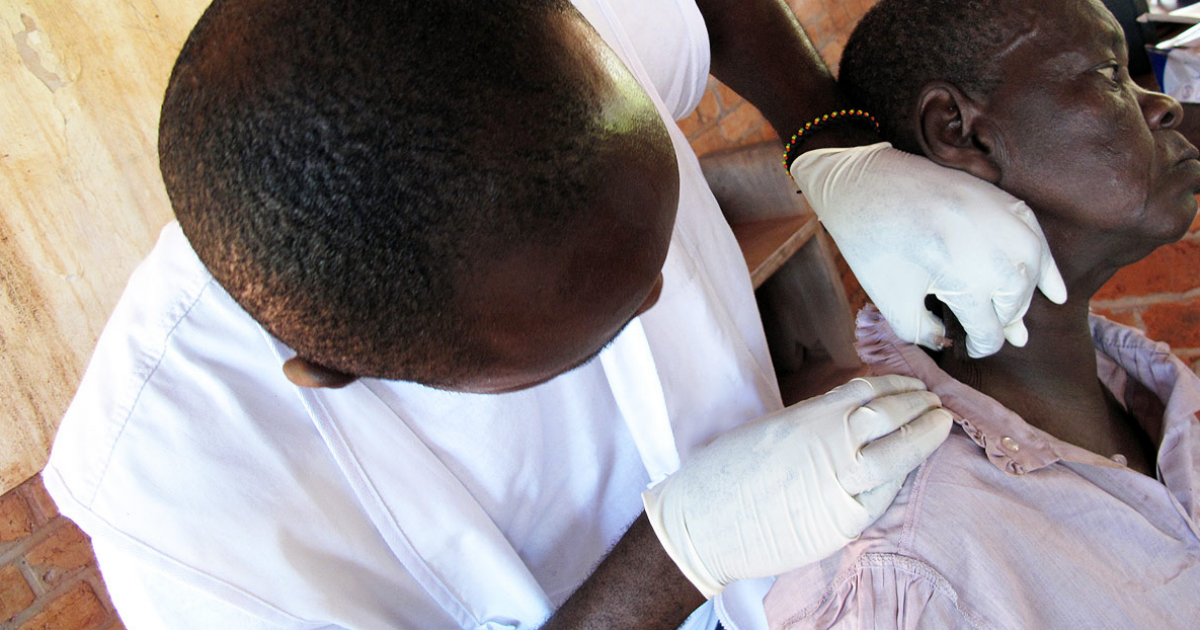
 Entomological patterns in the human African trypanosomiasis focus of Komo Mondah, Gabon

TL Kohagne, M M’eyi, R Mimpfoundi, J Louis

Abstract

Background: The incidence of sleeping sickness is still considerable in the Komo Mondah focus, in spite of case-detection strategy. A combined strategy that associated both mass screening and vector control is effective for the control of the disease. In the perspective of a targeted vector control in main transmission sites, we have carried out an entomological survey in the epicentre of the focus.

Objectives: To determine tsetse flies distribution, human-fly contact point and eventually risk factors for acquisition of the disease.

Methods: “Vavoua” traps were set for Glossina in four biotopes selected after an interview of HAT patients concerning their working places. Tsetse were captured and dissected. DNA from organs was analysed by PCR for trypanosome infections. The origin of blood meals was determined by ELISA.

Results: The focus is infested by three species of Glossina: G. palpalis palpalis (1149: 91.85%) found in all biotopes; G. fuscipes fuscipes (85: 6.79%) and G. caliginea (17: 1.36%) found in water spots and landing stages. They are infected by three subgenera of trypanosomes and only G. palpalis palpalis is infected by human trypanosomes. G. fuscipes fuscipes is infected by T. brucei sl and G. caliginea is not infected.  Flies are absent at the periphery of houses except in one village. Only 29.20% of blood meals were from humans. Landing stages built in swamp mangrove are presenting the higher index of epidemiological risk and populations are exposed to the disease when they go to the area for taking their fishing boats.

Conclusion: Swamp mangrove would be targeted in priority during a vector control campaign.

Key-words: Transmission, Human African Trypanosomiasis, Glossina, Gabon.


Related posts:

Does General surgery clerkship

Gender-based profiling

Morphology of human myocardial bridges

Recent Posts

  • Editor’s choice: Tackling infectious diseases, NCDs and sexual reproductivehealth issues as we enter our 24th year of remarkable growth
  • Preconception and contraceptive care for women living with HIV/AIDSattending antiretroviral treatment clinics in Lagos State, Nigeria
  • Effects of SNPs on TNF-α and IL-10 cytokine expression in TB and HIVpatients in the Capricorn district, Limpopo Province, South Africa
  • Prevalence of Schistosomiasis in a neglected community, South western Nigeria at two points in time, spaced three years apart
  • Review of Leishmaniasis in the Middle East and North Africa

Recent Comments

No comments to show.

Archives

  • April 2024
  • May 2019
  • April 2019
  • September 2018
  • August 2018
  • January 2018
  • December 2017
  • November 2017
  • October 2017
  • September 2017

Categories

  • 2001 Issues
  • 2002 Issues
  • 2003 Issues
  • 2004 Issues
  • 2005 Issues
  • 2006 Issues
  • 2007 Issues
  • 2008 Issues
  • 2009 Issues
  • 2010 Issues
  • 2011 Issues
  • 2012 Issues
  • 2013 Issues
  • 2014 Issues
  • 2015 Issues
  • 2016 Issues
  • 2017 Issues
  • 2018 Issues
  • 2019 Issues
  • 2024 Issues
  • Articles
  • December issue
  • December Release
  • June Issue
  • June Release
  • March Issue
  • March Issue
  • March Release
  • News
  • number / volume 2
  • number /volume 1
  • number /volume 1
  • number /volume 1 2008
  • number 1
  • number 1
  • number 1
  • number 1
  • number 1
  • number 1
  • number 1
  • number 2
  • number 2
  • number 2
  • number 2
  • number 2
  • number 2
  • number 2
  • number 2 special Issue
  • number 2 special Issue 2
  • number 3
  • number 3
  • number 3
  • number 3
  • number 3
  • number 3
  • number 3
  • number 4
  • number 4
  • number 4
  • number 4
  • number 4
  • number 4
  • number/ volume 3 2008
  • number/ volume 4 2008
  • number/volume 1
  • number/volume 1
  • number/volume 2
  • number/volume 2
  • number/volume 2 2008
  • number/volume 3
  • number/volume 3
  • number/volume 3
  • number/volume 4
  • number/volume1
  • September Issue
  • September Release
  • Special Edition
  • special Issue
  • Uncategorized
  • Vol. 24 No. 1 (2024)
  • volume 1
  • volume 1
  • volume 1
  • volume 2
  • volume 2
  • volume 2
  • volume 2
  • volume 2
  • volume 3
  • volume 3
  • volume 3
  • volume 3
  • volume 4
  • volume 4
  • volume 4
  • volume 4
  • volume1

Categories

  • 2001 Issues
  • 2002 Issues
  • 2003 Issues
  • 2004 Issues
  • 2005 Issues
  • 2006 Issues
  • 2007 Issues
  • 2008 Issues
  • 2009 Issues
  • 2010 Issues
  • 2011 Issues
  • 2012 Issues
  • 2013 Issues
  • 2014 Issues
  • 2015 Issues
  • 2016 Issues
  • 2017 Issues
  • 2018 Issues
  • 2019 Issues
  • 2024 Issues
  • Articles
  • December issue
  • December Release
  • June Issue
  • June Release
  • March Issue
  • March Issue
  • March Release
  • News
  • number / volume 2
  • number /volume 1
  • number /volume 1
  • number /volume 1 2008
  • number 1
  • number 1
  • number 1
  • number 1
  • number 1
  • number 1
  • number 1
  • number 2
  • number 2
  • number 2
  • number 2
  • number 2
  • number 2
  • number 2
  • number 2 special Issue
  • number 2 special Issue 2
  • number 3
  • number 3
  • number 3
  • number 3
  • number 3
  • number 3
  • number 3
  • number 4
  • number 4
  • number 4
  • number 4
  • number 4
  • number 4
  • number/ volume 3 2008
  • number/ volume 4 2008
  • number/volume 1
  • number/volume 1
  • number/volume 2
  • number/volume 2
  • number/volume 2 2008
  • number/volume 3
  • number/volume 3
  • number/volume 3
  • number/volume 4
  • number/volume1
  • September Issue
  • September Release
  • Special Edition
  • special Issue
  • Uncategorized
  • Vol. 24 No. 1 (2024)
  • volume 1
  • volume 1
  • volume 1
  • volume 2
  • volume 2
  • volume 2
  • volume 2
  • volume 2
  • volume 3
  • volume 3
  • volume 3
  • volume 3
  • volume 4
  • volume 4
  • volume 4
  • volume 4
  • volume1

Archives

  • April 2024
  • May 2019
  • April 2019
  • September 2018
  • August 2018
  • January 2018
  • December 2017
  • November 2017
  • October 2017
  • September 2017

Tags

Achives Latest News


ISSN 1680-6905

  • P. O. Box 7072 ,Kampala, Uganda
  • Call Us: 256(41)530021
  • info@africanhealthsciences.org

Latest Activities

Usefull Link

  • About AHS
  • Services
  • Focus & Scope
  • Our Articles
  • Contact Us

Subscribe

For research updates from African Health Sciences, sign up now!

[contact-form-7 id="1620" title="Subscribe"]

African Health Sciences © All Right Reserved