
x
African Health Sciences
[contact-form-7 id="2459" title="Sidebar Form"]

  • 256(41)530021
  • info@africanhealthsciences.org
African Health Sciences
  • info@africanhealthsciences.org
  • Give Feedback
  • Home
  • About Us
  • Staff
  • Focus & Scope
  • For Authors
  • More Links
    • About The Journal
    • Latest Articles
    • Journal Archives
    • Our Events
    • Faq’s
  • Contact Us
Logo

Contact Info

  • P. O. Box 7072 Kampala, Uganda
  • +256(41)530021
  • info@africanhealthsciences.org
  • ISSN 1680-6905
  • <!--
  • -->

14Sep2017

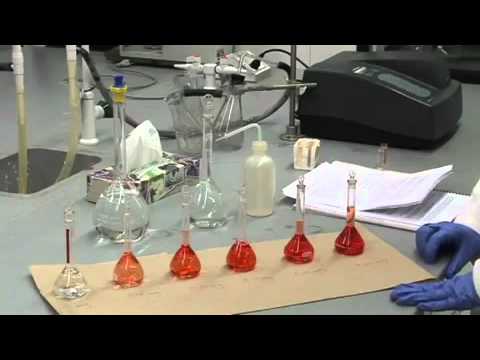
Spectrophotometric determination of sulphamethoxazole and trimethoprim (co-trimoxazole) in binary mixtures and in tablets.

by admin,  0 Comments
Spectrophotometric determination of sulphamethoxazole and trimethoprim (co-trimoxazole) in binary mixtures and in tablets.

S. Balyejjusa , R.O. Adome and D.Musoke
Department of Pharmacy, Makerere University, Faculty of Medicine,
P.O. Box 7072, Kampala, Uganda.

ABSTRACT
Background:The formulation of sulphamethoxazole (S) and trimethoprin (T) (CO-TRIMOXAZOLE) in a combination mixture is very good pharmacologically since it enhances the efficacy of the individual drugs. However in this combination, difficulties in analysis on ordinary UV spectrophotometry are introduced because the two components give overlapping spectral bands on zero-order. The United States Pharmacopoea (USP)-recommended HPLC analytical method is quite expensive.

Objective: The objective of the present work was to assess whether derivative spectrophotometry could be used to circumvent the overlapping spectral bands of the components and hence use it for routine analysis of the drug.
Study design:Experimental

Methods: The aqueous solution of the individual drugs and their binary mixutres were scanned on zero order and on first derivative at the wave length between 200- 300nm and at the pH of 4.5.

Results: The zero-order spectra of the compounds were completely overlapping. However the first-derivative scan offered better separation and hence T was determined from the absorbance at 237.6nm with negligible contribution from S (since at this point it was reading zero). Likewise S was determined at a wavelength of 259nm when T was reading zero. The linear calibration graphs were obtained for 4-25mgml -1 of S and for 4-20mgml -1 of T.

Conclusion: The method is rapid, simple and can be applied successfully to assay a mixture of the two drugs in pharmaceutical preparations.

Key words: sulphamethoxazole, trimethoprim, derivative spectroscopy, simultaneous determination.
African Health Sciences 2002;2(2):56-62

Related posts:

Camurati-Engelmann’s disease: a case report

Isolations of Bwamba virus from south central Uganda and north eastern Tanzania

Lay workers in directly observed treatment (DOT) programmes for tuberculosis in high burden settings

Recent Posts

  • Editor’s choice: Tackling infectious diseases, NCDs and sexual reproductivehealth issues as we enter our 24th year of remarkable growth
  • Preconception and contraceptive care for women living with HIV/AIDSattending antiretroviral treatment clinics in Lagos State, Nigeria
  • Effects of SNPs on TNF-α and IL-10 cytokine expression in TB and HIVpatients in the Capricorn district, Limpopo Province, South Africa
  • Prevalence of Schistosomiasis in a neglected community, South western Nigeria at two points in time, spaced three years apart
  • Review of Leishmaniasis in the Middle East and North Africa

Recent Comments

No comments to show.

Archives

  • April 2024
  • May 2019
  • April 2019
  • September 2018
  • August 2018
  • January 2018
  • December 2017
  • November 2017
  • October 2017
  • September 2017

Categories

  • 2001 Issues
  • 2002 Issues
  • 2003 Issues
  • 2004 Issues
  • 2005 Issues
  • 2006 Issues
  • 2007 Issues
  • 2008 Issues
  • 2009 Issues
  • 2010 Issues
  • 2011 Issues
  • 2012 Issues
  • 2013 Issues
  • 2014 Issues
  • 2015 Issues
  • 2016 Issues
  • 2017 Issues
  • 2018 Issues
  • 2019 Issues
  • 2024 Issues
  • Articles
  • December issue
  • December Release
  • June Issue
  • June Release
  • March Issue
  • March Issue
  • March Release
  • News
  • number / volume 2
  • number /volume 1
  • number /volume 1
  • number /volume 1 2008
  • number 1
  • number 1
  • number 1
  • number 1
  • number 1
  • number 1
  • number 1
  • number 2
  • number 2
  • number 2
  • number 2
  • number 2
  • number 2
  • number 2
  • number 2 special Issue
  • number 2 special Issue 2
  • number 3
  • number 3
  • number 3
  • number 3
  • number 3
  • number 3
  • number 3
  • number 4
  • number 4
  • number 4
  • number 4
  • number 4
  • number 4
  • number/ volume 3 2008
  • number/ volume 4 2008
  • number/volume 1
  • number/volume 1
  • number/volume 2
  • number/volume 2
  • number/volume 2 2008
  • number/volume 3
  • number/volume 3
  • number/volume 3
  • number/volume 4
  • number/volume1
  • September Issue
  • September Release
  • Special Edition
  • special Issue
  • Uncategorized
  • Vol. 24 No. 1 (2024)
  • volume 1
  • volume 1
  • volume 1
  • volume 2
  • volume 2
  • volume 2
  • volume 2
  • volume 2
  • volume 3
  • volume 3
  • volume 3
  • volume 3
  • volume 4
  • volume 4
  • volume 4
  • volume 4
  • volume1

Categories

  • 2001 Issues
  • 2002 Issues
  • 2003 Issues
  • 2004 Issues
  • 2005 Issues
  • 2006 Issues
  • 2007 Issues
  • 2008 Issues
  • 2009 Issues
  • 2010 Issues
  • 2011 Issues
  • 2012 Issues
  • 2013 Issues
  • 2014 Issues
  • 2015 Issues
  • 2016 Issues
  • 2017 Issues
  • 2018 Issues
  • 2019 Issues
  • 2024 Issues
  • Articles
  • December issue
  • December Release
  • June Issue
  • June Release
  • March Issue
  • March Issue
  • March Release
  • News
  • number / volume 2
  • number /volume 1
  • number /volume 1
  • number /volume 1 2008
  • number 1
  • number 1
  • number 1
  • number 1
  • number 1
  • number 1
  • number 1
  • number 2
  • number 2
  • number 2
  • number 2
  • number 2
  • number 2
  • number 2
  • number 2 special Issue
  • number 2 special Issue 2
  • number 3
  • number 3
  • number 3
  • number 3
  • number 3
  • number 3
  • number 3
  • number 4
  • number 4
  • number 4
  • number 4
  • number 4
  • number 4
  • number/ volume 3 2008
  • number/ volume 4 2008
  • number/volume 1
  • number/volume 1
  • number/volume 2
  • number/volume 2
  • number/volume 2 2008
  • number/volume 3
  • number/volume 3
  • number/volume 3
  • number/volume 4
  • number/volume1
  • September Issue
  • September Release
  • Special Edition
  • special Issue
  • Uncategorized
  • Vol. 24 No. 1 (2024)
  • volume 1
  • volume 1
  • volume 1
  • volume 2
  • volume 2
  • volume 2
  • volume 2
  • volume 2
  • volume 3
  • volume 3
  • volume 3
  • volume 3
  • volume 4
  • volume 4
  • volume 4
  • volume 4
  • volume1

Archives

  • April 2024
  • May 2019
  • April 2019
  • September 2018
  • August 2018
  • January 2018
  • December 2017
  • November 2017
  • October 2017
  • September 2017

Tags

Achives Latest News


ISSN 1680-6905

  • P. O. Box 7072 ,Kampala, Uganda
  • Call Us: 256(41)530021
  • info@africanhealthsciences.org

Latest Activities

Usefull Link

  • About AHS
  • Services
  • Focus & Scope
  • Our Articles
  • Contact Us

Subscribe

For research updates from African Health Sciences, sign up now!

[contact-form-7 id="1620" title="Subscribe"]

African Health Sciences © All Right Reserved