
x
African Health Sciences
[contact-form-7 id="2459" title="Sidebar Form"]

  • 256(41)530021
  • info@africanhealthsciences.org
African Health Sciences
  • info@africanhealthsciences.org
  • Give Feedback
  • Home
  • About Us
  • Staff
  • Focus & Scope
  • For Authors
  • More Links
    • About The Journal
    • Latest Articles
    • Journal Archives
    • Our Events
    • Faq’s
  • Contact Us
Logo

Contact Info

  • P. O. Box 7072 Kampala, Uganda
  • +256(41)530021
  • info@africanhealthsciences.org
  • ISSN 1680-6905
  • <!--
  • -->

12Sep2017

The Retained Placenta

by admin,  0 Comments
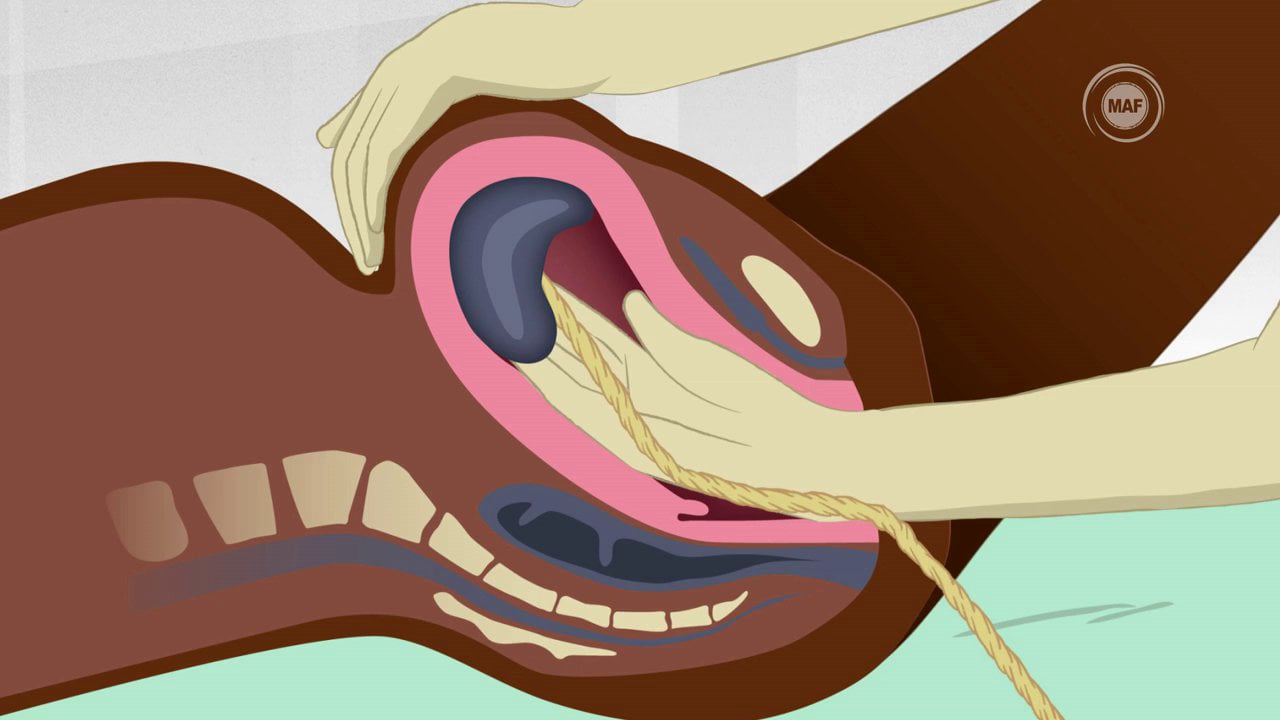
The Retained Placenta.

Andrew D Weeks
Visiting Lecturer, Makerere University, Faculty of Medicine, Department of Obstetrics and Gynaecology

Abstract
The retained placenta is a significant cause of maternal mortality and morbiditythroughout the developing world. It complicates2% of all deliveries and has a case mortality rate of nearly 10% in rural areas. Ultrasound ~tudies have provided fresh insights into the mechanism of the third stage of labour and the aetiology of the retained placenta. Following delivery of the baby, the retro-placental myometrium is initially relaxed.

It is only when it contracts that theplacenta shears away from the placental bed and is detached. This leads to its spontaneous expulsion. Retained placenta occurs when the retro-placental myometrium fails to contract. There is evidence that this may also occur during labour leading to dysfunctional labour. It is likely that this Is caused by the persistence of one of the placental inhibitory factors that are normallyreduced prior to the onset of labour, possibly progesterone or nitric oxide.

Presently, the only effective treatment is manual removal of placenta (MROP) under anaesthetic. This needs to be carried out within a few hours of delivery to avoid haemorrhage. For women in rural Africa, facilities for MROPare scarce, leading to high mortality rates. Injection of oxytocin Into the umbilical vein has been suggested as an alternative. This method relies on the injected oxytocin passing through the placenta to contract the retro-p lace ntal myometrium and cause its detachment.

Despite several placebo controlled trials of this technique, no firm conclusion have been reached regarding its efficacy. This may be due to inadequate delivery of the oxytocin to the placenta. Further trials are in progress to assess the optimal dose of oxytocin as well as the efficacy of a new technique designed to improve delivery of the oxytocin to the placental bed.

African Health Sci. 2001; 1(1): 36-42

Related posts:

AIDS Vaccine 2001: Looking to the Future

A comparative study of vaginal misoprostol and intravenous oxytocin for induction of labour in women...

CASE REPORTS: Empty sella syndrome: Incidential findings at computerised tomography

Recent Posts

  • Editor’s choice: Tackling infectious diseases, NCDs and sexual reproductivehealth issues as we enter our 24th year of remarkable growth
  • Preconception and contraceptive care for women living with HIV/AIDSattending antiretroviral treatment clinics in Lagos State, Nigeria
  • Effects of SNPs on TNF-α and IL-10 cytokine expression in TB and HIVpatients in the Capricorn district, Limpopo Province, South Africa
  • Prevalence of Schistosomiasis in a neglected community, South western Nigeria at two points in time, spaced three years apart
  • Review of Leishmaniasis in the Middle East and North Africa

Recent Comments

No comments to show.

Archives

  • April 2024
  • May 2019
  • April 2019
  • September 2018
  • August 2018
  • January 2018
  • December 2017
  • November 2017
  • October 2017
  • September 2017

Categories

  • 2001 Issues
  • 2002 Issues
  • 2003 Issues
  • 2004 Issues
  • 2005 Issues
  • 2006 Issues
  • 2007 Issues
  • 2008 Issues
  • 2009 Issues
  • 2010 Issues
  • 2011 Issues
  • 2012 Issues
  • 2013 Issues
  • 2014 Issues
  • 2015 Issues
  • 2016 Issues
  • 2017 Issues
  • 2018 Issues
  • 2019 Issues
  • 2024 Issues
  • Articles
  • December issue
  • December Release
  • June Issue
  • June Release
  • March Issue
  • March Issue
  • March Release
  • News
  • number / volume 2
  • number /volume 1
  • number /volume 1
  • number /volume 1 2008
  • number 1
  • number 1
  • number 1
  • number 1
  • number 1
  • number 1
  • number 1
  • number 2
  • number 2
  • number 2
  • number 2
  • number 2
  • number 2
  • number 2
  • number 2 special Issue
  • number 2 special Issue 2
  • number 3
  • number 3
  • number 3
  • number 3
  • number 3
  • number 3
  • number 3
  • number 4
  • number 4
  • number 4
  • number 4
  • number 4
  • number 4
  • number/ volume 3 2008
  • number/ volume 4 2008
  • number/volume 1
  • number/volume 1
  • number/volume 2
  • number/volume 2
  • number/volume 2 2008
  • number/volume 3
  • number/volume 3
  • number/volume 3
  • number/volume 4
  • number/volume1
  • September Issue
  • September Release
  • Special Edition
  • special Issue
  • Uncategorized
  • Vol. 24 No. 1 (2024)
  • volume 1
  • volume 1
  • volume 1
  • volume 2
  • volume 2
  • volume 2
  • volume 2
  • volume 2
  • volume 3
  • volume 3
  • volume 3
  • volume 3
  • volume 4
  • volume 4
  • volume 4
  • volume 4
  • volume1

Categories

  • 2001 Issues
  • 2002 Issues
  • 2003 Issues
  • 2004 Issues
  • 2005 Issues
  • 2006 Issues
  • 2007 Issues
  • 2008 Issues
  • 2009 Issues
  • 2010 Issues
  • 2011 Issues
  • 2012 Issues
  • 2013 Issues
  • 2014 Issues
  • 2015 Issues
  • 2016 Issues
  • 2017 Issues
  • 2018 Issues
  • 2019 Issues
  • 2024 Issues
  • Articles
  • December issue
  • December Release
  • June Issue
  • June Release
  • March Issue
  • March Issue
  • March Release
  • News
  • number / volume 2
  • number /volume 1
  • number /volume 1
  • number /volume 1 2008
  • number 1
  • number 1
  • number 1
  • number 1
  • number 1
  • number 1
  • number 1
  • number 2
  • number 2
  • number 2
  • number 2
  • number 2
  • number 2
  • number 2
  • number 2 special Issue
  • number 2 special Issue 2
  • number 3
  • number 3
  • number 3
  • number 3
  • number 3
  • number 3
  • number 3
  • number 4
  • number 4
  • number 4
  • number 4
  • number 4
  • number 4
  • number/ volume 3 2008
  • number/ volume 4 2008
  • number/volume 1
  • number/volume 1
  • number/volume 2
  • number/volume 2
  • number/volume 2 2008
  • number/volume 3
  • number/volume 3
  • number/volume 3
  • number/volume 4
  • number/volume1
  • September Issue
  • September Release
  • Special Edition
  • special Issue
  • Uncategorized
  • Vol. 24 No. 1 (2024)
  • volume 1
  • volume 1
  • volume 1
  • volume 2
  • volume 2
  • volume 2
  • volume 2
  • volume 2
  • volume 3
  • volume 3
  • volume 3
  • volume 3
  • volume 4
  • volume 4
  • volume 4
  • volume 4
  • volume1

Archives

  • April 2024
  • May 2019
  • April 2019
  • September 2018
  • August 2018
  • January 2018
  • December 2017
  • November 2017
  • October 2017
  • September 2017

Tags

Achives Latest News


ISSN 1680-6905

  • P. O. Box 7072 ,Kampala, Uganda
  • Call Us: 256(41)530021
  • info@africanhealthsciences.org

Latest Activities

Usefull Link

  • About AHS
  • Services
  • Focus & Scope
  • Our Articles
  • Contact Us

Subscribe

For research updates from African Health Sciences, sign up now!

[contact-form-7 id="1620" title="Subscribe"]

African Health Sciences © All Right Reserved